Historic Kolkata Bonedi Bari Durga Puja Walking Guide (2026)
Curator's Editorial Overview
Long before public 'Barowari' community pandals took over the city, Durga Puja was celebrated exclusively in the colossal 'Thakur Dalans' (pillared courtyards) of Bengal's aristocratic merchant and zamindar families (known as Bonedi Baris).
Visiting a Bonedi Bari puja is an unparalleled step back in time. Here, you witness centuries-old sacred traditions: handmade clay idols sculpted right inside the courtyard, vintage Belgian cut-glass chandeliers illuminating 200-year-old marble archways, and family rituals performed by descendants wearing traditional dhoti and silk sarees.
Unlike bustling public club pandals, Bonedi Bari celebrations radiate serene, meditative reverence. Mornings (9:00 AM - 1:00 PM) are the best times to witness sacred rituals like Kumari Puja, Bodhan, and the traditional offering of homemade sweets and bhog.
Ranked Pandals on This Trail
Ordered by artistic acclaim, crowd accessibility & transit synergy
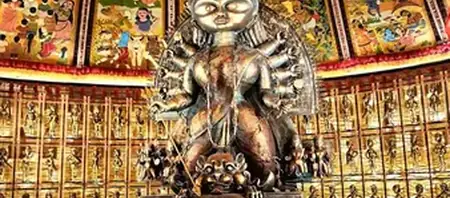
Shobhabazar Rajbari Thakur Dalan
শোভাবাজার রাজবাড়ি ঠাকুর দালান
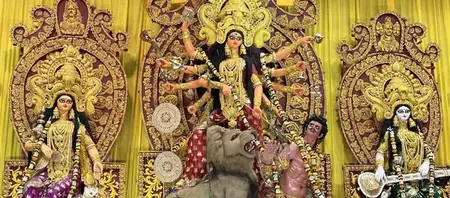
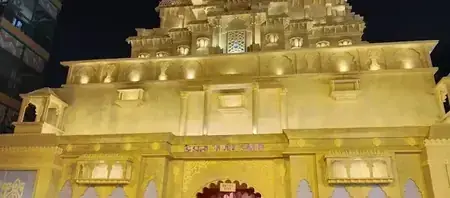
Shobhabazar Rajbari Thakur Dalan is one of the premier Durga Puja heritage venues in North Kolkata/Howrah, celebrated for its rich culture, grand traditions, and community festivities.
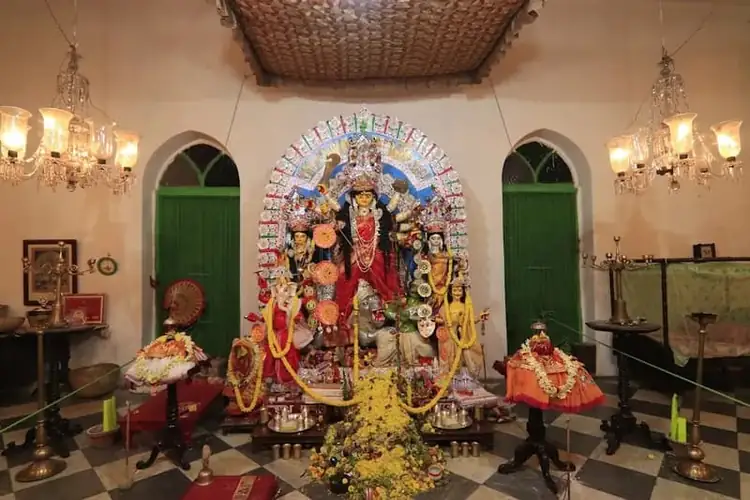
Badan Chand Roy Bari
কলুটোলা বদন চাঁদ রায় বাড়ি
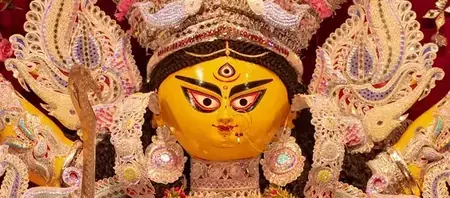
Established in 1858 by Babu Badan Chandra Roy, this celebrated 168-year-old aristocratic household Puja (fondly known as Colootola Roy Bari) is a crown jewel of Central Kolkata's Bonedi Barir Pujas. Built by the prestigious British-era architectural firm Mackintosh Burn, the grand palatial mansion features a magnificent open-courtyard thakurdalan adorned with classical colonial columns, arches, vintage European chandeliers, and heritage cast-iron railings. Strictly observing devout Vaishnav traditions, the family avoids animal sacrifice, conducting symbolic sacrifices of sugarcane, ash gourd (chalkumro), and fruits on Maha Ashtami and Sandhi Puja. The deity of Maa Durga is sculpted on-site in the timeless Sabeki Ekchala style adorned with immaculate daker saaj, making it an essential destination for heritage enthusiasts and photographers visiting Central Kolkata.
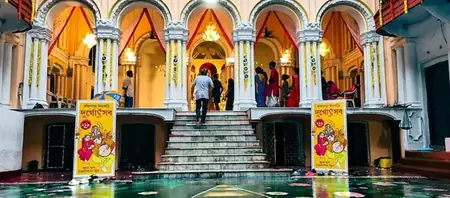
Darjipara Mitra Bari
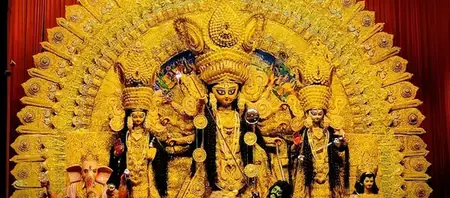
Celebrated Durga Puja in North Kolkata, showcasing vibrant cultural heritage, traditional rituals, and innovative art themes that attract festive revelers across the region.
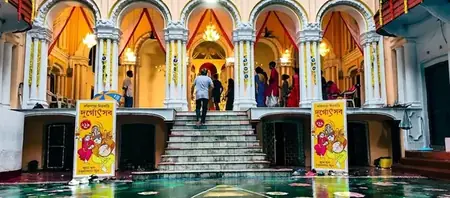
Hathkhola Dutta Barir Durga Pujo
Baboo Ramtanu Dutta , also popularly known as Tanu Baboo was amongst the foremost Baboos of colonial Calcutta . But the real story of this illustrious family begins a long long time back in the reign of Rajah Adisur of Bengal . Adisur invited five learned Brahmins from Kanyakubja or Kanauj to come and settle in Bengal . Each of these Brahmins brought a non-Brahmin servitor along with them . Purushottam Dutta was one of the five servitors who came to Bengal with the legendary five Brahmins . And it was he who is credited to have founded Dutta family . He settled in the village of Bally on the banks of river Ganges . Later his descendents shifted to Andul . They were bestowed with the title ‘Chaudhury’ by the nawabs of Bengal . Finally the family split into three branches . While one branch ( of Ramsharan Dutta ) remained in Andul the other two ( Gobindasharan Dutta and Harisharan Dutta branches ) resettled themselves at GadhGobindaPur and Muragachha . Gobindasharan’s grandson Ramchandra Dutta came to settle at Chitpur in the new city of Calcutta . He was the ‘mutshuddi’ of the import export office of East India Company and also a native zamindar . The family Durga puja is more than two centuries old and still continues without interruption . Presently there are three pujas held in homes of different shoriks or clans . Haatkhola Dutta once boasted of the most phenomenal and luxurious Durgotsavs in the city of Calcutta . No one but the Brahmin priests are entitled to touch the idol once she is seated on the platform for worship .The pratima is unique ‘Muttchowree’ styled . This means that the backdrop of the idol is in the shape of three temple spires , instead of the usual hemispherical type . The family still tries to maintain similarity in the pratimas of all three households . They are one of the few houses of the city which still preserve the original ‘khaas bangla’ mould of the face . Realeasing of neelkantha bird during Vijaya Dashami was an old tradition which had to stopped a couple of years back due to new rules . The family also celebrates Kali puja . Tradition has it that the married ladies of the house do the farewell ‘boron’ during Durga puja and unmarried girls do it on Kali puja .Rathayatra festival of this family was also a spectacle to behold . Presently , trying conditions have forced them to retract the ritual to a modest scale . Duttas were one of the very few families of old Calcutta which did not resort to appeasing British officials to create wealth and fame for themselves . There are no dancing halls in this house . There were no balls or parties and no nautches held during Durga puja to appease white shahibs . But even then , members from this family held extremely important positions of office in Colonial times and were widely respected throughout India . The family also produced countless advocates , doctors and men of repute . Netaji Subhas Chandra Bose was born to the girl ( His mother Prabhavati ) belonging to this family . Kedarnath Dutta , later known as Bhaktivindo thakur later became the founder of the new age gaudiya vaishnava movement . Rishi Aurobindo was also related with bloodlines of this family . Courtesy: The Pujo Company
RAMDULAL NIBAS er Durga Pujo
During the late 18th and early 19th centuries, Bengali merchant Ramdulal De(Sarkar) was a well-known figure in the maritime trade between India and America. One of the earliest Bengali businessmen, Ramdulal Dey (Sarkar)amassed wealth in the 17th century through trade with the newly independent United States of America (USA). At a period when the US had just attained independence from Great Britain and was actively trying to develop its economy and trade, he was a pioneer in the Indo-American maritime trade. The second-oldest American consulate (and oldest in India) was established in Kolkata on November 19, 1792, by order of George Washington, the first President of the United States, due to the prosperous trading links between Ramdulal and Kolkata. Due to their extravagant lifestyle, Asutosh Deb and Pramathanath Deb, his two sons, gained the renown nicknames “Chhatu Babu” and “Latu Babu.” They allegedly used to burn 100 rupee bills to light cigars. Despite their lack of commercial success, they were well-liked in their respective industries. Musician Asutosh alias Chhatu Babu was a prominent classical music lover and expert. His nach ghar (dancing room), where renowned national musicians and dancers like Gauhar Jaan and Pandit Ravi Shankar performed, became famous during his lifetime. Ishwar Ram Dulal Deb (Sarkar) first held Durga Pujas at his home on Beadon Street in 1770. Later, this ritual came to be known as Chatu Babu Latu Babur Barir Traditional Durga Puja. Courtesy: The Pujo Company
Baghbazar Haldar Bari er Pujo
The Durga Puja celebration of Baghbazar Haldar house is one of oldest and historically significant household Durga Puja of Kolkata. The idol is worshipped daily for the last 453 years. The Durga idol at Haldarbari is made of Kasthipathar (Touchstone) instead of clay. It is evident from the structure and style of the deity that it has been sculpted during the Pala era of Bengal. From this fact one can estimate that the age of the idol is around 600 to 700 years. Courtesy: The Pujo Company
Navigate all 6 pandals seamlessly
Open the turn-by-turn multi-stop GPS directions in Google Maps or customize this trail in our interactive Route Planner.